
Explicate works with you to define, build, and deliver AI results — adapting fast as understanding deepens and priorities shift.
We take on the ambiguity. We bring the architecture. We stay in it with you through every pivot — until the outcome is real, measured, and yours.
Every engagement begins with a Discovery sprint — structured clarity before a single line of code.We are not a dev shop. We are not a consultancy.
We are a partner who takes on the ambiguity, builds the clarity, and stays accountable for the outcome.
The distinction matters. Dev shops execute the spec you already have. Consultancies advise. We sit with you in the uncertainty, structure it rigorously, and build toward a result you can measure.
AI can generate working software overnight. What it cannot do is determine whether you’re solving the right problem, for the right user, in the right way. That decision-making is now the bottleneck — and the thing that compounds. We bring the judgment, structured and priced accordingly.
Every AI engagement we’ve seen stall had the same root cause: undefined success, vague scope, no accountability. We structure engagements around what you’re actually trying to achieve — and stay in it with you until you can measure whether it worked.
Before architecture, before code, before tools — we map your system, quantify every risk, and write down every boundary. Discovery is where creativity and judgment compound into a specification. That specification is what every good engagement builds from.
Every engagement adds to our Analogue Library — edge cases, domain patterns, structural insights, reusable modules. Each client benefits from the accumulated knowledge of every project before theirs. That’s the flywheel.

We think that’s the wrong instinct.
Understanding must come before action — always. Not as a philosophy, but as a practice. Our methodology exists to make that discipline concrete: before a line of code is written, before an architecture is proposed, before a contract is signed, we map the problem, name the risks, and define exactly what success looks like.
We ask you to pause before you build. Not because we’re cautious — but because the cost of building the wrong thing correctly is higher than the cost of taking two weeks to get the question right.
Rigor before regret!

We have a rigorous pathway for each. The pathway determines the phases, the risks, the team, and how we adapt together.
“Are you adding AI, replacing with AI, or building with AI?”
Your system is in production. You want AI to reduce manual effort, surface insight, or automate routine tasks — without disrupting what already works. AI is introduced carefully, at the edges. Autonomy is earned in steps.
The existing system isn’t something to build on — it’s the thing that needs replacing. Higher-stakes than Adoption. We map the legacy forensically, preserve what works, architect the new, and migrate with a documented rollback plan at every stage.
No existing system. A hypothesis — an idea for a product that AI makes newly possible. Primary risk is market, not technical. Phase 1 validates two hypotheses before anything is built: one about the product, one about the data.
Not sure which pathway fits? → Start with a conversation
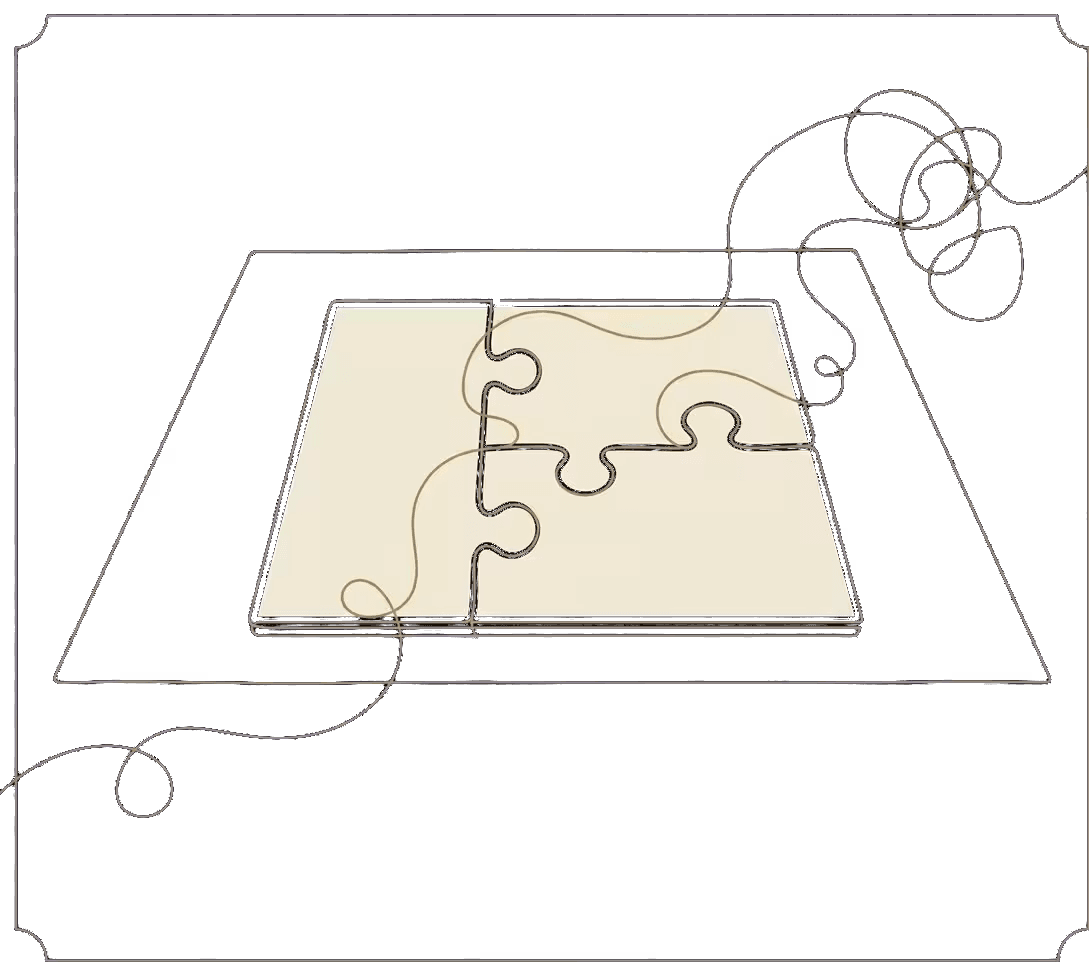
“We don’t add AI to broken processes. We build reliable systems — and use AI only where it measurably helps.”The core philosophy behind every Explicate engagement.
Every methodology, phase, and contract traces back to one of these seven principles. If a decision cannot be justified by an axiom, it should not be made.
Never build until you can articulate the problem, the audience, and the success criteria in writing. You cannot solve an equation you haven't written down.
Every initiative is a hypothesis. Before it begins, define what would validate it — and what would kill it. A killed hypothesis is evidence. Continuing past the evidence is the only failure.
If you cannot measure it, you cannot claim it. ROI is not a bonus metric to report at the end — it is the definition of success, specified before work begins.
Understand the problem space as a system before building anything within it. Complexity amplifies chaos — it does not resolve it. The domain is the context. Without mapping it, you are optimising a component of a machine you do not understand.
Systems prove themselves in steps: assist, then automate, then scale. Every level of autonomy must be earned through demonstrated performance at the previous level. Skipping the ladder doesn't accelerate delivery. It creates undetected failure at scale.
Every problem has an abstract structure. Map it. Find where that structure has been solved before — in a different domain, era, or context. Make cross-domain insight systematic, not accidental. The vertical gives us depth. The Isomorphism Canvas gives us differentiation.
Regardless of automation level, human oversight and authority remain constant. Some things must not change under transformation. Every system we build has a tested, documented escalation path to human review.

Measured outcomes. Validated hypotheses. No vague claims of transformation.
Reduction in manual review effort. AI pipeline detecting vague billing, block charges, and administrative overhead at 93% accuracy.
Read the case →Companies served on one unified AI platform. Centralised compliance, logging, identity, and LLM evaluation — built from zero.
Read the case →Vendor onboarding time compressed. 80%+ effort reduction on track for Phase 2. GenAI automation of EDI workflows for a global B2B platform.
Read the case →To deploy a personalised AI digital twin for any celebrity or author. Text, audio, and real-time personalisation — at scale.
Read the case →
Discovery first. Delivery second. The detail deepens as we go — that’s by design.
This is the most important two weeks in any AI engagement. We learn your system from the inside — mapping workflows, identifying risks, proposing architecture, and writing down every boundary. By the end, the problem is no longer ambiguous. It is a specification.
“Paid discovery isn’t a step toward the engagement. It IS the engagement.”
Phase B delivers what Phase A specified — and adapts as understanding deepens. We work with you continuously: structured sprints, clear milestones, fast pivots when the evidence calls for it. The goal is always the outcome, not adherence to a plan that no longer fits.
“Our value is the ability to pivot fast, adapt, and work with you toward your real business outcomes.”

At Explicate, we deliver outcome-focused AI consulting, not sell software. Using a first-principles methodology, we deconstruct complex challenges to design tailored, architecture-driven AI solutions that deliver measurable business value.
We thrive in ambiguity, partnering with you through every stage to ensure your AI initiatives are validated, operational, and aligned with your business goals.
Every engagement begins with a Discovery Sprint, bringing clarity, strategic alignment, and a well-defined roadmap before a single line of code is written.
Talk to us to discover our methodology and explore how we can help your business achieve its goals.

Every engagement begins with a Discovery sprint. We learn your system. You get a clear picture of the problem — and a path forward. Whether or not we proceed to delivery, you leave with something you didn’t have before.
2–3 weeks · Discovery sprint · No commitment required beyond that